

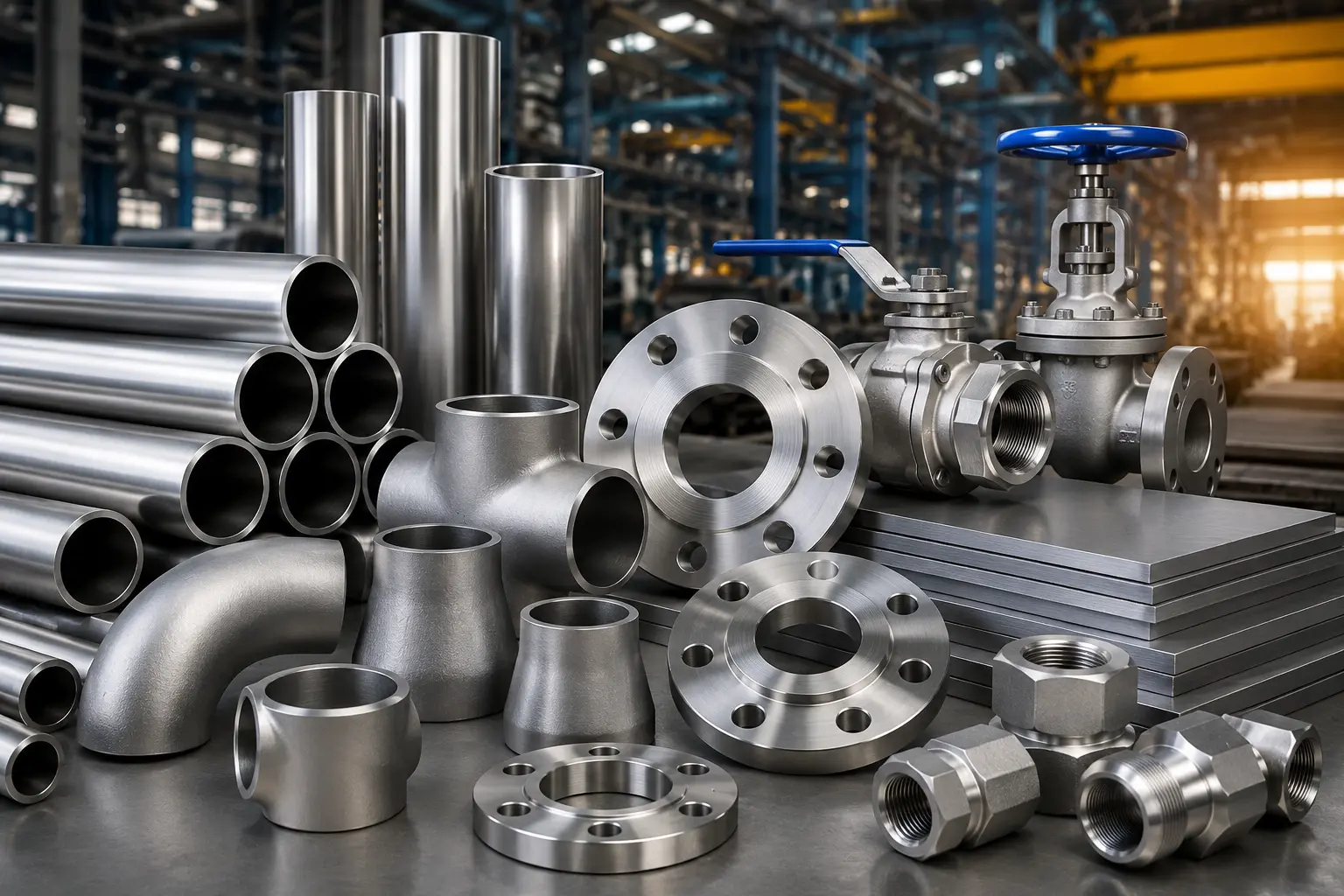
For long-term reliability, product quality, and operational efficiency, choosing the right
metal products is crucial in today's competitive industrial landscape. Industries such as
oil and gas, petrochemical, power generation, construction, and manufacturing depend heavily
on high-quality metal products to ensure smooth operations and minimize downtime.
Industrial metal products, such as flanges and fittings and pipes and tubes, form the
foundation of contemporary infrastructure. Businesses can make better decisions about where
to source materials for projects and industrial applications if they are aware of their
significance.
The Growing Demand for Industrial Metal Products
Industrial Metal Products' Steady Growth The demand for materials that are long-lasting
and resistant to corrosion has skyrocketed in recent years. Manufacturing companies
require products that can withstand extreme temperatures, pressure variations, and harsh
environmental conditions.
High-quality metal products not only improve system performance but also reduce
maintenance costs and increase the lifespan of industrial equipment. This makes them a
valuable investment for businesses seeking long-term operational efficiency.
1. Stainless Steel Pipes and Tubes
Pipes and tubes made of stainless steel are among the most frequently utilized industrial
products. They offer excellent corrosion resistance, strength, and durability, making
them suitable for transporting liquids, gases, and chemicals.
Due to their ability
to function in demanding environments, stainless steel piping systems are widely used in
industries like food processing, pharmaceuticals, chemical processing, and power
generation.
Key Benefits:
- Corrosion resistance
- High temperature tolerance
- Long service life
- Low maintenance requirements
2. Industrial Flanges
Flanges play a critical role in connecting pipes, valves, pumps, and other equipment
within industrial piping systems. They provide easy access for inspection, cleaning, and
maintenance while ensuring leak-proof connections.
Available in various materials
and specifications, industrial flanges are widely used in oil refineries, petrochemical
plants, and power stations.
Common Types:
- Weld Neck Flanges
- Slip-On Flanges
- Blind Flanges
- Socket Weld Flanges
- Threaded Flanges
3. Buttweld Pipe Fittings
Buttweld Pipe Connectors Within piping systems, pipe fittings help connect, redirect, and
regulate fluid flow. In high-pressure applications, buttweld fittings are renowned for
their strength and dependability.
Elbows, tees, reducers, and caps are typical buttweld fittings. These parts are
necessary to keep industrial operations moving smoothly and efficiently.
Advantages:
- Strong welded connections
- Improved flow efficiency
- Reduced leakage risk
- Suitable for high-pressure systems
4. Alloy Steel Products
Products Made of Alloy Steel Alloy steel products are engineered to provide superior
mechanical properties compared to standard carbon steel. They are ideal for demanding
industrial applications due to their excellent resistance to wear, heat, and
corrosion.
Industries such as power generation, heavy engineering, and petrochemicals commonly use
alloy steel plates, pipes, and fittings to enhance equipment performance.
Applications:
- Boilers
- Heat exchangers
- Pressure vessels
- Industrial machinery
5. Nickel Alloy Products
Products Made of Nickel Alloy Nickel alloys such as Inconel, Monel, and Hastelloy are widely used in highly corrosive and high-temperature environments. These materials are made to withstand harsh operating conditions and aggressive chemicals.
They are commonly found in:
- Chemical processing plants
- Marine applications
- Aerospace industries
- Offshore oil and gas facilities
Why Product Quality Matters
Industrial projects require materials that meet international quality standards. Using inferior products can lead to equipment failures, safety concerns, and costly downtime.
Businesses should always source materials from trusted suppliers that offer:
- Quality-certified products
- Material test certificates
- Consistent inventory availability
- Technical support and expertise
Choosing the right supplier helps ensure product reliability and project success.
Choosing a Reliable Industrial Metal Supplier
A dependable supplier provides more than just products. They offer industry knowledge, timely delivery, and customer support throughout the procurement process.
Businesses should think about the following when choosing a supplier:
- Expertise in the field
- Product range
- Methods for quality control
- Capabilities for delivery
- Customer service
Working with an experienced supplier ensures access to high-quality materials that meet project specifications and performance requirements.
Conclusion
Industrial metal products are the foundation of modern manufacturing and infrastructure
projects. Whether it is stainless steel pipes, industrial flanges, buttweld fittings, alloy
steel products, or nickel alloys, each component plays a vital role in maintaining
efficiency and reliability.
By investing in premium-quality metal products and partnering with a trusted supplier,
businesses can improve operational performance, reduce maintenance costs, and achieve
long-term success in competitive industrial markets.